


Workflow Transformation
Transform one workflow. Change how the work performs.
We work inside a critical workflow, redesign it around AI, and build the production system
that makes the new way of working real.










The workflow is the unit of transformation.
The value is not another AI tool or another engineer. It is a consequential piece of work that becomes faster, less expensive, more reliable, and easier to govern. We begin with the operating outcome, then build only what the workflow requires.
From operating constraint to working system.
Move your operation from how it works today to how it should run tomorrow.
-
01 / UNDERSTAND
Experience the work in real-time as it unfolds.
We follow the decisions, exceptions, systems, and controls that determine the outcome, revealing where the work gets slow.
-
02 / REDESIGN
Rebuild the workflow around what AI makes possible.
We decompose the work into business outcomes that can be valued, tested, and delivered independently.
-
03 / BUILD
Put the new operation into production.
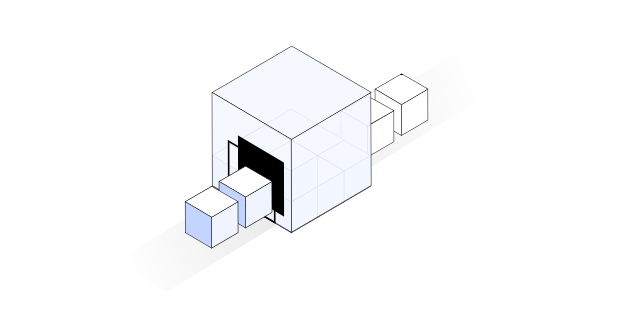
The delivery team builds the system in modules, and each module is accepted against the client’s own production data.
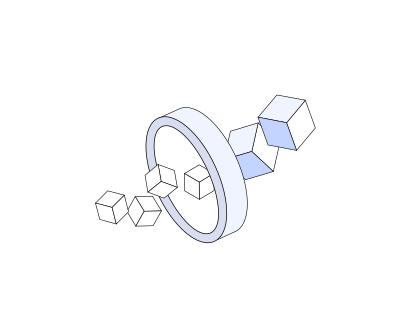

The team is shaped around the workflow, not sold from a staffing template.
Creative Chaos owns the workflow outcome and deploys the combination of engineering, operational, domain, design, and delivery expertise its complexity requires. You buy the transformed workflow, not a prescribed team configuration.

A delivery team sized to the complexity of the workflow

Acceptance based on real business outcomes, not a demonstration

Engineering and operational expertise added where the work requires it

Accountability through deployment, adoption, and operation
We can build it. Or we can operate it.
-
BUILD
We build it. You operate it.
The system is delivered into your environment and your team owns ongoing operation after acceptance.
-
OPERATE
We build it and keep it running.
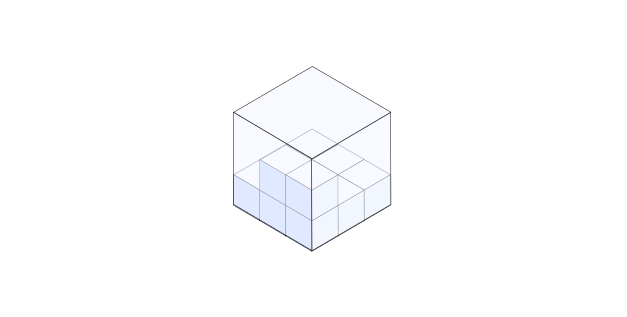
Creative Chaos hosts and operates the system. Modules begin billing only after they pass agreed acceptance tests on production data.
Questions, answered
What qualifies as a workflow worth transforming?
A strong candidate produces a recurring business outcome, carries meaningful cost, delay, risk, or lost capacity, and has enough existing evidence to define what better performance means. We begin with the work and its economics, not with an AI use case.
What is the difference between Build and Operate?
With Build, Creative Chaos delivers the accepted system into the agreed client environment and the client assumes ongoing operation. With Operate, Creative Chaos hosts or manages the system, maintains it, and remains accountable for its ongoing performance under agreed service terms.
How is a module accepted?
The client runs an agreed test using production data against an expected result that already exists. Acceptance is based on a business outcome the client can verify, not on a Creative Chaos demonstration.
Where does the system run?
Build engagements typically run in the client’s environment. Operate engagements may run in an environment managed by Creative Chaos, subject to the client’s security, privacy, residency, and regulatory requirements.
What happens at the end of an Operate term?
The client can export its operational data in an agreed open format. Continued service, transition options, platform access, and any exceptional continuity protections are governed by the agreement established before launch.
How does Creative Chaos decide who works on the engagement?
The delivery team is shaped around the workflow’s complexity. Creative Chaos may combine engineering, operational, domain, design, architecture, and delivery expertise as required. The client buys the transformed workflow, not a prescribed staffing configuration.
When does billing begin under Operate?
The workflow is decomposed into business modules with agreed acceptance tests. A module begins billing only after it passes its test on the client’s production data, subject to the client responsibilities and commercial terms defined in the agreement.
Who owns the data, code, and platform?
The client’s operational data remains theirs and is exportable. Under Build, ownership and deployment terms are defined for the delivered system. Under Operate, Creative Chaos may retain and license the operating platform while the service is active. The engagement documents make the boundary explicit before work begins.
What happens if the workflow or requirements change?
Changes are assessed against the workflow outcome, module boundaries, acceptance tests, operating cost, and timeline. Work outside the agreed scope follows the change process established in the engagement.
Which workflow would change the economics if it performed differently?
Start with the work, not the technology. We will help determine whether it deserves a system, and whether Build or Operate is the right model.