


ESTABLISHED 2000
Technology keeps changing. Our responsibility does not.
Creative Chaos works inside consequential operations, redesigns how work gets done, and builds the systems
that make the change real.









The work does not end with the answer.
Organizations rarely fail because nobody can identify the opportunity. They fail in the distance between the recommendation, the build, and the moment people must work differently.
Creative Chaos was built for that distance. We combine operating judgment and engineering capability in one delivery system, then carry responsibility through production and adoption.
Four shifts in technology. One standard for delivery.
26 Years learning the same lesson: the technology matters, but the operating change determines whether it creates value.
01
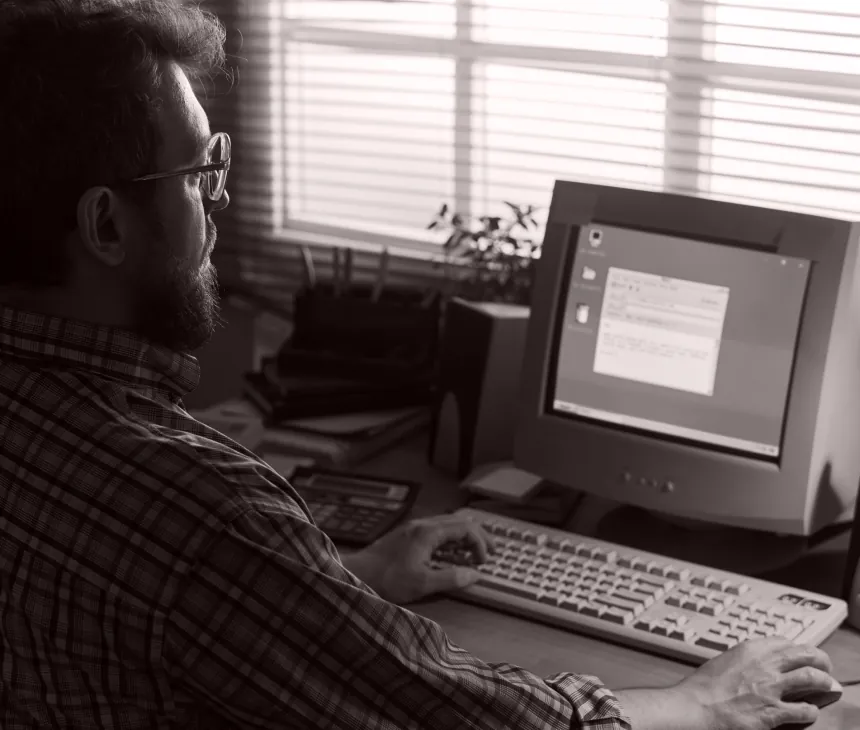
The web became infrastructure.
Creative Chaos began by building production systems as businesses moved critical operations onto the internet.
02

Enterprise moved everywhere.
Mobile changed where work happened. We adapted the delivery model and carried complex systems into the field.
03

The stack became distributed.
Cloud platforms, software services, and global teams changed how systems were built. Accountability still had to remain whole.
04

AI changed what can be rebuilt.
The opportunity moved beyond better software. It became possible to redesign the work itself and build systems around the new operation.
Embedded. Technical. Accountable.
-
Enter the operation
The real problem is rarely visible from a brief. We work close enough to see the decisions, exceptions, and informal systems that keep the business moving.
-
Build the change
Advice is not the deliverable. Operators and engineers work together so the operating design becomes a production system without a translation gap.
-
Stay through adoption
A system is not finished when it ships. We remain accountable until it works inside the organization and the new behavior holds.
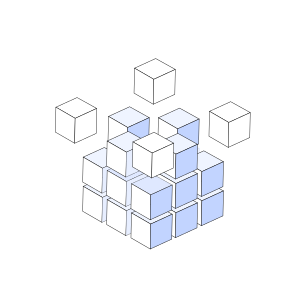
Forward Deployed Delivery
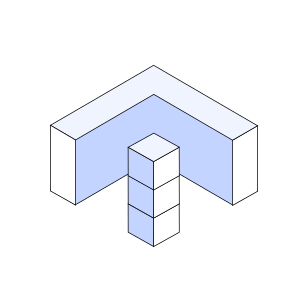
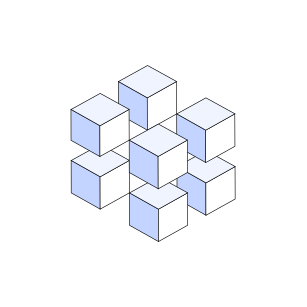
Some problems need one person who can understand and build. Others need an Expert and Engineer working as a pair. Enterprise agendas require integrated Squads across connected workstreams.
The shape changes with the problem. The accountability does not.
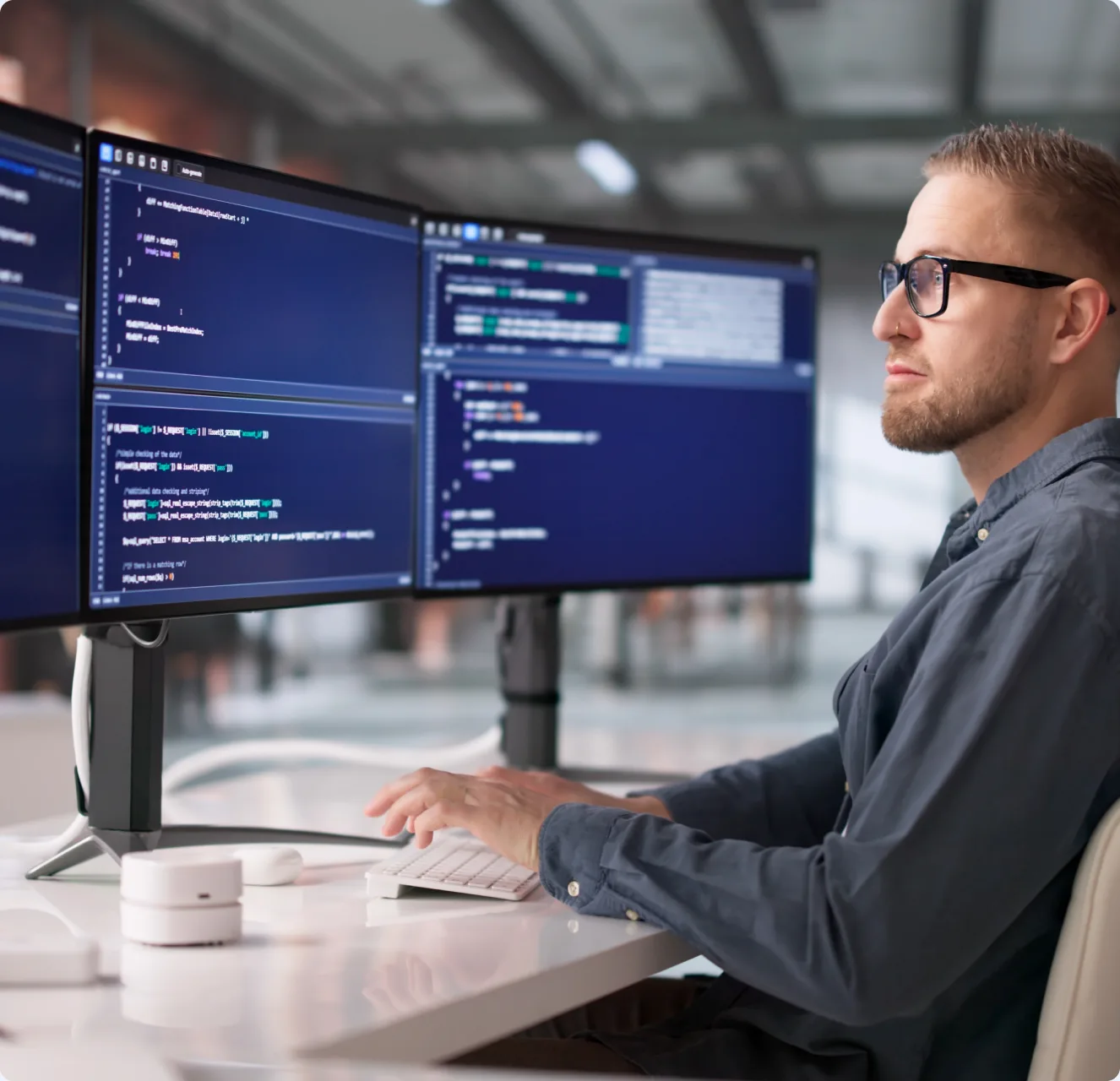
HOW WE WORK NOW
Software is no longer the end product. A better-performing business is.
The company story matters. The work in front of you matters more!
Tell us where the operation is constrained, where delivery keeps fragmenting, or where a consequential change has stalled.