How embedded AI-native engineers accelerated a company’s modernization
A $150M operation was stuck planning in spreadsheets, with engineering hires months away. We embedded two AI-native engineers so the build could start immediately.
- 40%
- reduction in manual planning effort
- 2
- AI-native engineers embedded in the team
- 100%
- Built on the company's own stack, owned outright
The Situation
The company had grown faster than its systems. More than 800 SKUs across several product lines, with sales split roughly 60/40 between D2C and B2B. Inventory, purchasing, logistics, and production each ran in separate spreadsheets, none sharing data, and the planning team spent its days reconciling them by hand.
Leadership had already decided to modernize planning, build a system on infrastructure it owned, and run the operation from one real-time view instead of four disconnected ones. The roadmap was the company’s, the priorities were set, and the planning team understood the operation better than any outsider could.
What the program lacked was engineering capacity. Not strategy, not direction, capacity.
The build required senior engineers fluent in AI-native development, exactly the capability the hiring market makes hardest to add quickly. Recruiting two engineers of that caliber would take six to nine months, with no guarantee at the end of it.
The Bottleneck
The company looked at the two doors most teams look at, and neither fit.
Off-the-shelf planning software would have forced the operation to adapt to the software. Its channel split, SKU structure, and cadence between purchasing and production did not match the model a platform would impose. The company wanted to own its planning system, not lease someone else’s.
Ordinary contract engineering had a different problem. Generic contractors deliver a build and leave, turning a modernization program into a series of handoffs and leaving the team to maintain a system no one on it built.
The company needed engineering capability it could not hire fast enough, embedded into its team, working on its roadmap, and building a system it would own outright. That is staff augmentation, but not the commodity version of it.
What We Provided
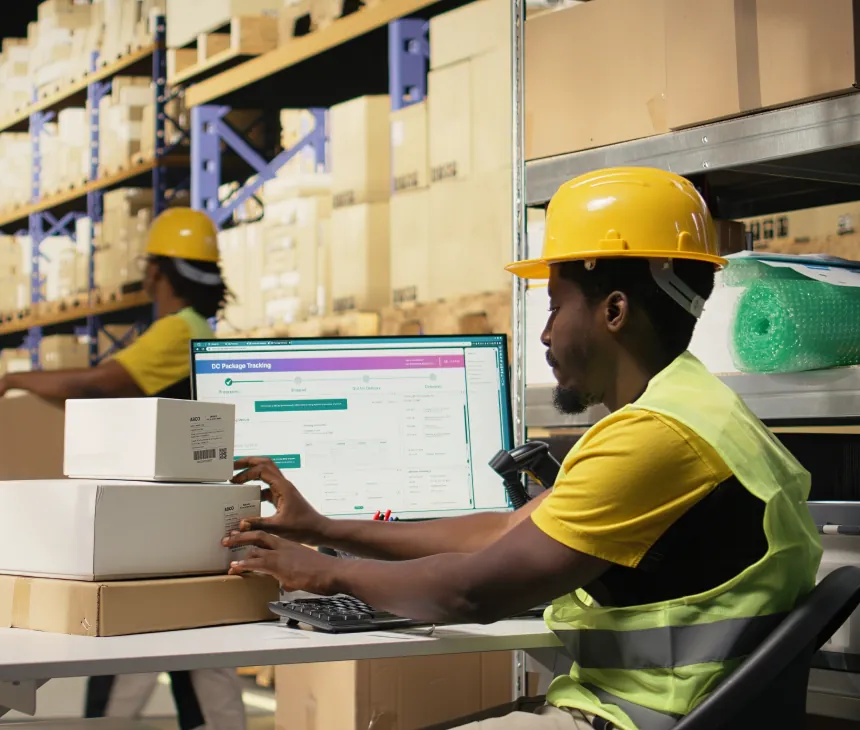
We embedded two AI-native engineers directly into the planning team. They did not arrive with a method to impose or a platform to sell. They joined a program already in motion and supplied the capability it was missing.
For the first two to three weeks, the engineers mapped how planners moved between inventory, purchasing, logistics, and production, where the spreadsheets connected or contradicted each other, and which manual steps existed only because no one had built the alternative. Working inside the team made that mapping faster and more accurate because the people who lived the workflow were in the room.
The first working system came together in about ten weeks, unifying the four systems into one real-time view. Three things separated this from ordinary staff augmentation.
AI-native engineering, not extra hands: The value was the capability, not the headcount. The engineers brought skills the company could not have hired within six to nine months, allowing the program to move at the pace the business needed rather than the pace recruiting would have set.
A long-term embed, not a project handoff: The engineers stayed after the first system launched, continuing to build for new SKUs, channels, and planning logic as the operation matured.
Total client ownership: The system was built on the company’s own stack and is owned outright, with no vendor lock-in. CC manages the engineers; the company owns the result and the roadmap.
The Result
The program moved on the company’s timeline instead of the hiring market’s. Manual planning effort dropped by about 40%, and the team now works from one real-time view across inventory, purchasing, logistics, and production instead of reconciling four sets of files by hand.
The value shows up in several ways.
Capability without the hiring drag: Embedding the engineers through Creative Chaos put the capability on the team in weeks, with no recruiting risk. The value is the months of progress pulled forward and the program de-risked, not a salary line. What the company bought was the time it did not lose.
Recovered planning capacity: A 40% reduction in manual effort across a five-person team recovers roughly two full-time equivalents. At a loaded cost of about $90K per planner, that is approximately $180K a year returned to actual planning rather than transcription.
Avoided third-party software: The planning platform the company would otherwise have licensed costs about $120K a year in licensing and maintenance, plus a one-time implementation it never had to pay for. Counting the recurring cost alone, that is approximately $120K a year avoided.
Together, those two counted drivers represent roughly $300K a year in directly measurable value.
Inventory and working-capital efficiency. Real-time visibility means fewer stockouts on fast movers, less overstock on slow movers, and less capital tied up unnecessarily. Across more than 800 SKUs and two channels, the effect is meaningful, but it tracks demand patterns over time rather than a single number, so it remains estimated.
Taken together, we put the total value at stake at approximately $300K to $500K+ per year. The counted floor comes from recovered capacity and avoided software, with the upper end driven by inventory and working-capital efficiency. The acceleration and de-risking sit on top of that: harder to price, but the reason the company chose this path.
The two engineers are still embedded, still building. The roadmap is still the company’s, and the system grows as the company does.
You already know which parts of your business shouldn't work the way they work.
The only question is whether this is the week you find out what it's costing you.